
Photo: Minette Lontsie · CC BY-SA 4.0
Same leaf, two names, two ways to cook it. Everything you need to know about eru and okok, two great Cameroonian dishes made with Gnetum leaves.
Ask someone from the Northwest and someone from Yaoundé about their favourite leaf dish, and you might think they're talking about two different things. One says eru, the other says okok. Yet they're talking about the same plant. So what's actually the difference between eru and okok?
One plant, two names
Eru and okok are the same leaf: Gnetum africanum, a forest leaf. What changes is the name, depending on the region. It's okok in the Centre and South regions, and eru in the Northwest and Southwest.
But while the leaf is the same, the dishes that carry these names aren't quite alike. Each has its own recipe, its own sides and its own place in everyday life.
Eru: palm oil, meat and waterleaf
In Koki's recipe, eru is cooked with:
- eru leaves, shredded very finely;
- waterleaf;
- beef, plus smoked fish or stockfish;
- crayfish;
- a generous amount of palm oil.
The crayfish goes into the hot palm oil first, then the eru with a little of the meat stock. The waterleaf comes in at the very end: lay it on top, cover for five minutes, then stir it through. Add it too early and it releases so much water that the whole dish turns watery.
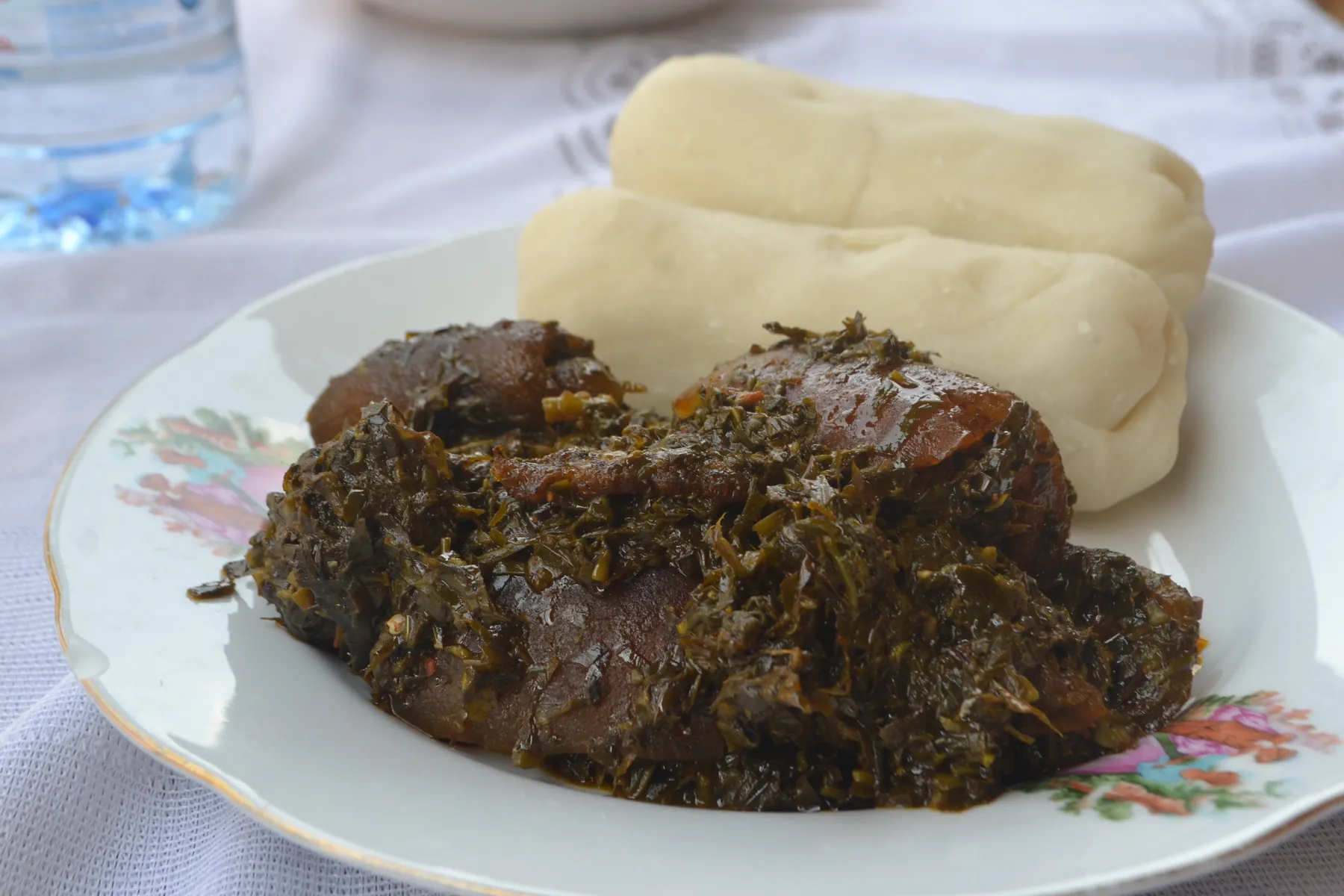
Good eru is dark green, glossy with palm oil, with tender chunks of beef throughout. It should be thick, so thick a spoon could almost stand up in it.
Eru isn't a quick meal. It's a Northwest and Southwest speciality, made for important occasions and shared in large quantities. It's served with water fufu (fermented cassava dough) or garri, and eru with water fufu is one of the most celebrated pairings in Cameroonian food.
👉 Get the eru recipe · Water fufu and eru
Okok: peanuts and smoked fish
Koki's okok goes another way. The shredded leaves cook with:
- peanuts, boiled and roughly ground;
- flaked smoked fish;
- onion and garlic;
- crayfish;
- palm oil.
You fry the onion and garlic in palm oil, add the crayfish, then the peanut paste, cooking it until the raw peanut smell is gone. The okok leaves follow with a splash of water, and the smoked fish goes in near the end.
The result is rich, slightly bitter from the leaves and nutty from the peanuts. Just like with ndolé, keep the peanut paste rough, not smooth.
Okok is also an everyday dish, much loved in Yaoundé and the Centre region. Eat it with water fufu, miondo, plantains or white rice.
What they share: the shredding
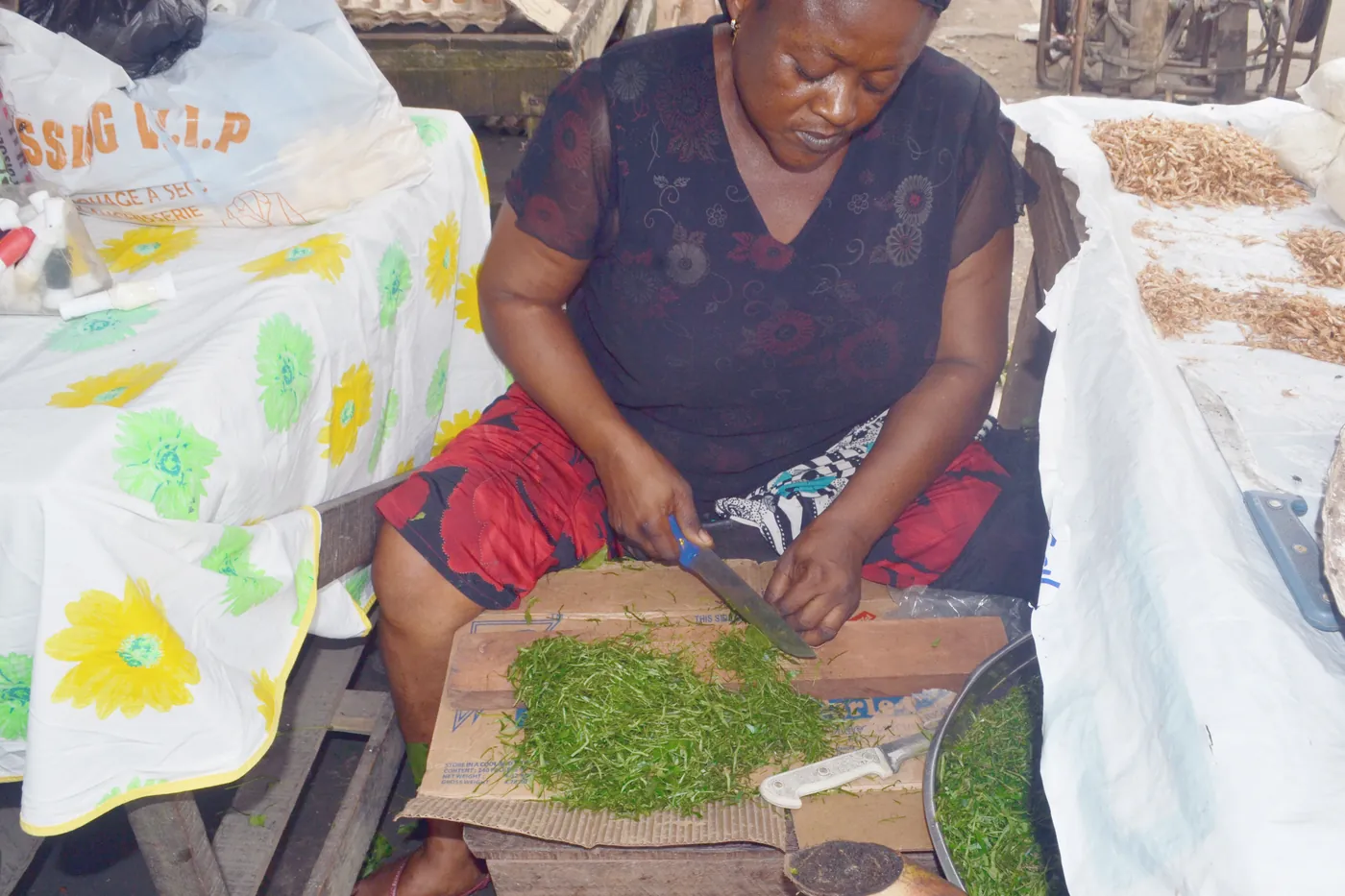
Whether you're making eru or okok, one step decides everything: shredding the leaves. They need to be cut very, very finely, almost into threads. The finer the shred, the better the texture and the more flavour the leaf gives. Never chop them into big pieces.
It takes time. Budget at least 30 minutes for the shredding alone. In Cameroon, women often shred eru together the night before a big meal: many hands make it go faster.
Fresh or dried?
Fresh leaves are best. If dried is all you can find, soak them in warm water before cooking: Koki's eru recipe soaks them for 20 minutes, and the okok recipe for 30.
And if you're nowhere near an African market? The app suggests spinach as a stand-in. Let's be honest: it won't be the same dish. But it's a good way to practise the method until you can get the real leaves.
So where does ndolé fit in?
People sometimes mix it up with the other two because it's green, thick and cooked with peanuts. But ndolé uses a different leaf: bitter leaf. It's boiled, then squeezed completely dry before it's cooked with peanut paste and meat. It's Cameroon's national dish, and it deserves an article of its own.
In short
- Same leaf: Gnetum africanum.
- Eru: Northwest and Southwest. Cooked in palm oil with meat, smoked fish and waterleaf. Served with water fufu or garri, for big occasions.
- Okok: Centre and South. Cooked with peanuts and smoked fish. Served with water fufu, miondo, plantains or rice, an everyday favourite.
Both full recipes, with quantities and every step, are in the Koki app, in English and French, and they work offline. Download Koki and tell us which side you're on: eru or okok?
Recipes in this article


Cook with Koki
All of these recipes in English and French, with guided cooking mode. They stay available offline.
All the ways to get Koki →