EthiopiaMedium 40 min Prep: 10 min 4 servings
A spongy fermented flatbread made from teff that serves as both plate and utensil in Ethiopian meals.
Ingredients
Preparation
- Combine the teff flour (and barley/all-purpose flour if using) with the water in a clean glass or ceramic bowl. Stir until smooth. Do not use a metal bowl — teff ferments best in non-reactive containers. Cover with a clean breathable cloth or loose-fitting lid to keep out dust while letting air in.
- Leave the batter at room temperature to ferment for 2–3 days undisturbed. By day 2, you should see bubbling on the surface and the batter will smell sour and yeasty. After 3 days, the batter will have separated — a thin liquid (ersho) will float on top. Carefully pour off this liquid without stirring. The remaining batter is your injera starter.
- Before cooking, stir the fermented batter well and add salt. If it is very sour, stir in a small pinch of baking soda. The batter should be pourable — similar to thin crepe batter. Add a small amount of warm water to thin it if needed.
- Heat a large non-stick skillet or flat pan (the traditional mitad) over medium heat until very hot. Lightly oil the surface with a paper towel dipped in vegetable oil — but only for the first injera; subsequent ones may need no oiling.
- Pour the batter in a spiral from the outside edge toward the center, tilting the pan to fill any gaps. Work quickly — the batter sets fast. Immediately cover the pan with a lid. Cook for 2–3 minutes on one side only — injera is cooked on ONE side only, never flipped. The top should be dry, spongy, and covered in small 'eyes' (holes). Slide it onto a clean cloth.
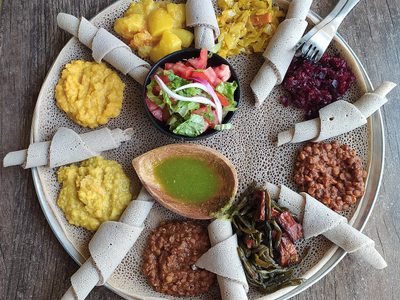
- Let each injera cool completely and uncovered before stacking — stacking warm injera causes sticking. Repeat until all batter is used. Serve as a plate base for stews (wats), tearing off pieces to use as edible utensils.
Cook with Koki
Take this recipe offline and enjoy guided cooking with Koki.
Free · iOS & Android