
Photo: BACHELOR45 · CC BY-SA 4.0
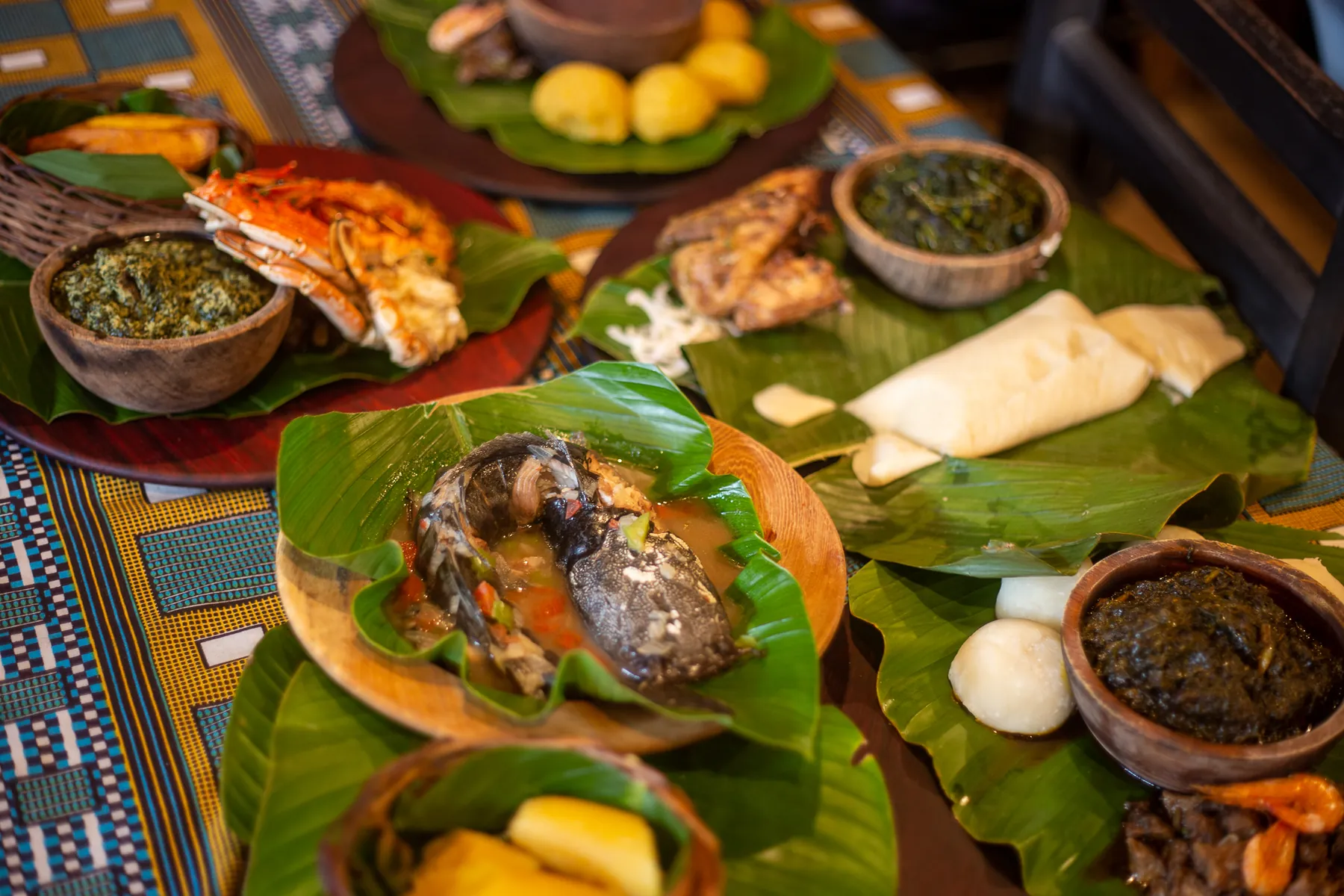
Ndolé, koki, achu, eru and taro with yellow sauce: five Cameroonian festive dishes, what makes each one special, and what you can cook ahead.
December is coming, and with it the question every family asks: what are we cooking for Christmas, and for the 31st? If you want a table that truly tastes of Cameroon, here are five festive dishes from Koki's recipes. For each one, we'll tell you what makes it special, which part takes time, and most importantly what you can do ahead, so you don't spend the whole celebration at the stove.
1. Ndolé, the centrepiece
There's no other place to start. Ndolé is Cameroon's national dish, and it sits at the centre of every important occasion, end-of-year gatherings included. Serving ndolé is how you tell your guests they are welcome.
It's a stew of bitter leaves simmered with ground peanuts, palm oil and meat. Two things make all the difference. First, after boiling the leaves, squeeze out every last drop of water, or the sauce will turn thin. Second, keep the peanut paste chunky. You're not after smooth peanut butter: the texture is part of the dish.
The good news for the holidays: ndolé gets better as it sits. Make it the day before and the flavours will have time to come together. Serve it with miondo, plantains or white rice.
2. Koki, the one to make well ahead
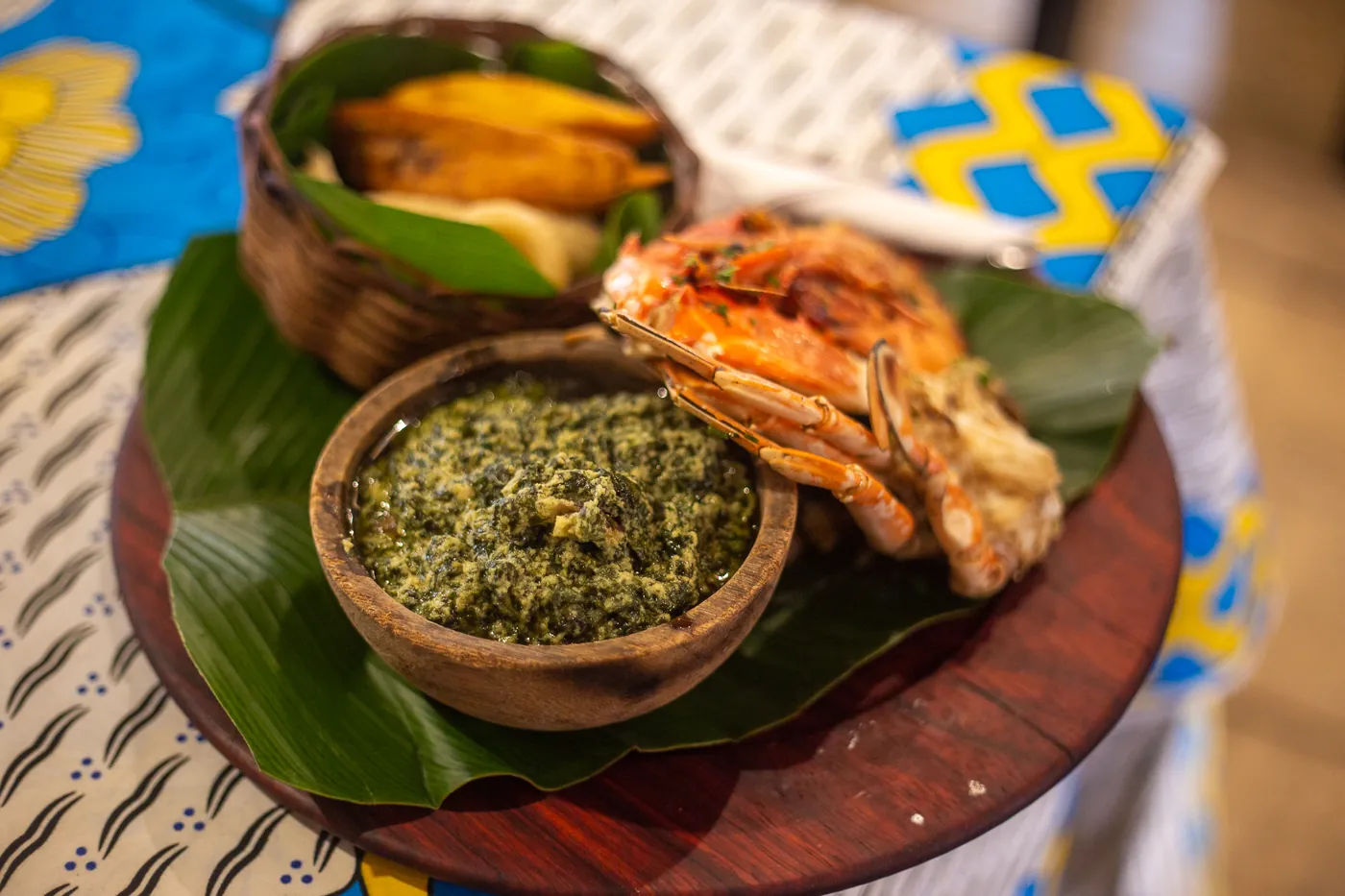
Koki is a pudding of blended black-eyed peas and red palm oil, wrapped in banana leaves and steamed for two hours. It's also the dish the app is named after.
This is not a last-minute dish. The beans soak for at least four hours (overnight is best), then you rub them between your hands to slip off the skins. It's the slowest step, but it's what gives you smooth koki instead of a grainy one. The batter should be very thick, almost like dough: too much water and the koki won't set.
The holiday trick: cooked koki freezes beautifully for up to three months. Make it a week or two early, wrap single portions, and steam them for 20 minutes on the day. Then unwrap them at the table, because the smell of the banana leaf opening up is half the joy.
3. Achu, for the big occasions
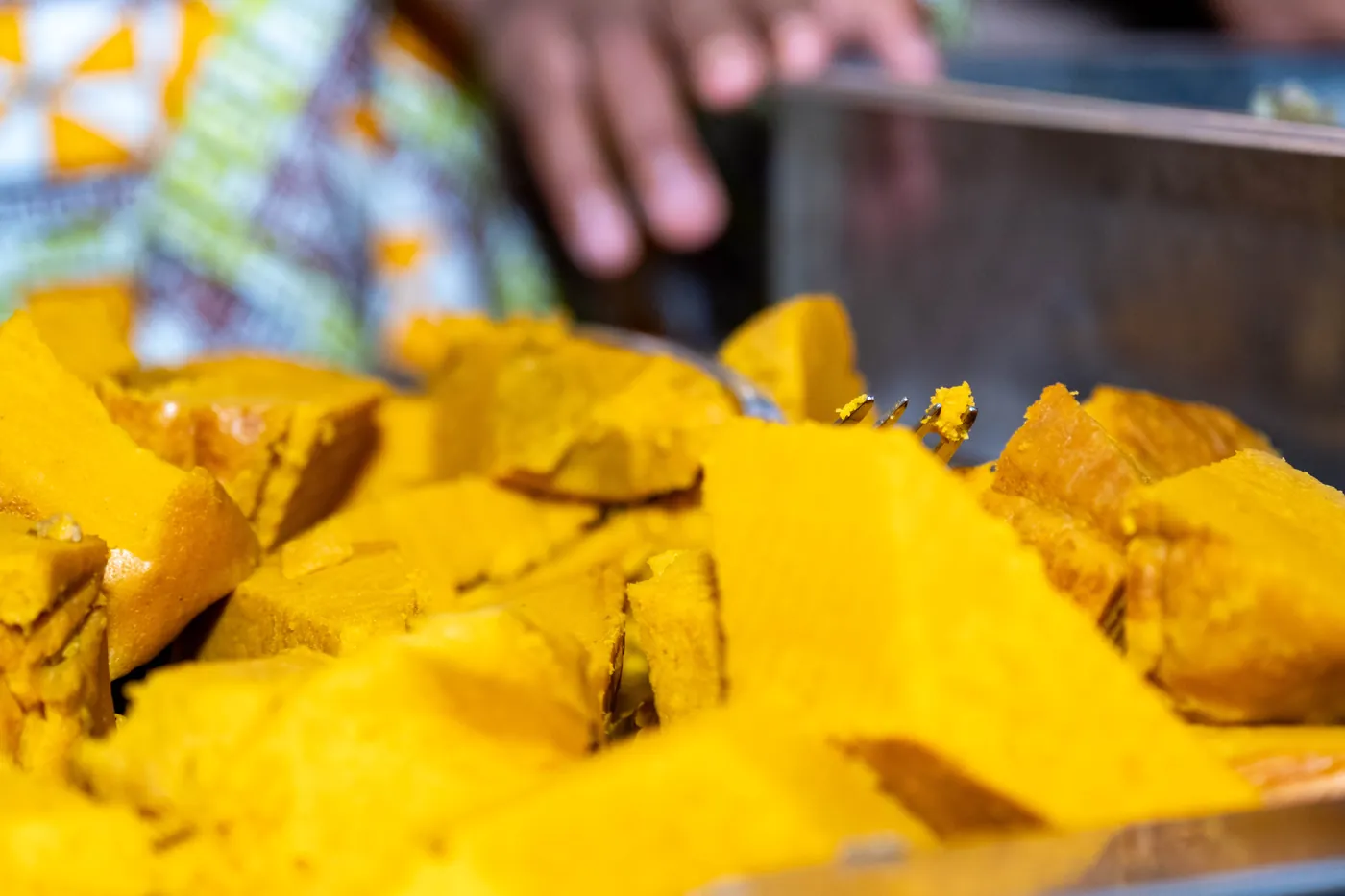
If your roots are in the Northwest, you already know achu isn't an everyday meal. It's a ceremonial dish, served at traditional weddings, funerals and title-taking ceremonies: white pounded taro with a yellow soup made from palm oil and limestone water (kanwa).
Everything depends on the soup. You pour the limestone water very slowly into warm palm oil, stirring all the time, until it turns into a creamy, golden sauce. Go too fast and it breaks. Koki rates this one "hard", and with good reason.
On a festive table it's a showstopper: smooth white taro sitting in deep golden-orange soup is one of the most striking sights in Cameroonian cooking. You eat it with your hands, pinching off a piece of taro and dipping it deep into the soup.
4. Eru, made to be shared
Eru is a speciality of the Northwest and Southwest. It's never a quick weeknight meal: it's made for important occasions and shared in large quantities, which makes it perfect when the whole family is home.
The eru leaves cook in palm oil with beef, smoked fish and crayfish. The waterleaf goes in at the very end, for just five minutes, so the dish doesn't turn watery. It should finish thick and glossy, so thick a spoon could almost stand up in it.
To plan ahead: the longest job is shredding the eru, as finely as you can. In Cameroon, women often do it together the night before. It may be the perfect job for the cousins who arrive early. Serve with water fufu or garri.
👉 Get the eru recipe · Water fufu and eru
5. Taro with yellow sauce, the lighter option
Love the idea of achu but not of pounding taro in the middle of the party? Taro with yellow sauce is for you. It's the same yellow sauce, made the same way, but poured over simply boiled taro. In Northwest homes it's often served as a lighter alternative to full achu, as a starter or a side.
Two practical tips: oil your hands or wear gloves when peeling taro, because it can make your skin itch. And the yellow sauce keeps for two days in the fridge. If it splits when you warm it up, whisk in a splash of hot water.
👉 Get the taro with yellow sauce recipe
A simple plan so you're not doing it all on the day
- Two weeks before: the koki, cooked and frozen in portions.
- The day before: the ndolé (it'll taste better the next day) and the eru shredding, with help if you can get it.
- Up to two days before: the yellow sauce, if you're serving taro with yellow sauce.
- On the day: the eru, the taro, and the achu if you're going for it.
You don't have to make all five. A good pot of ndolé and a tray of koki already make a real festive table.
All of these recipes, with quantities and step-by-step instructions, are in the Koki app, in English and French, and they stay available offline even when the network doesn't. Download Koki and happy holidays.
Recipes in this article


Cook with Koki
All of these recipes in English and French, with guided cooking mode. They stay available offline.
All the ways to get Koki →