
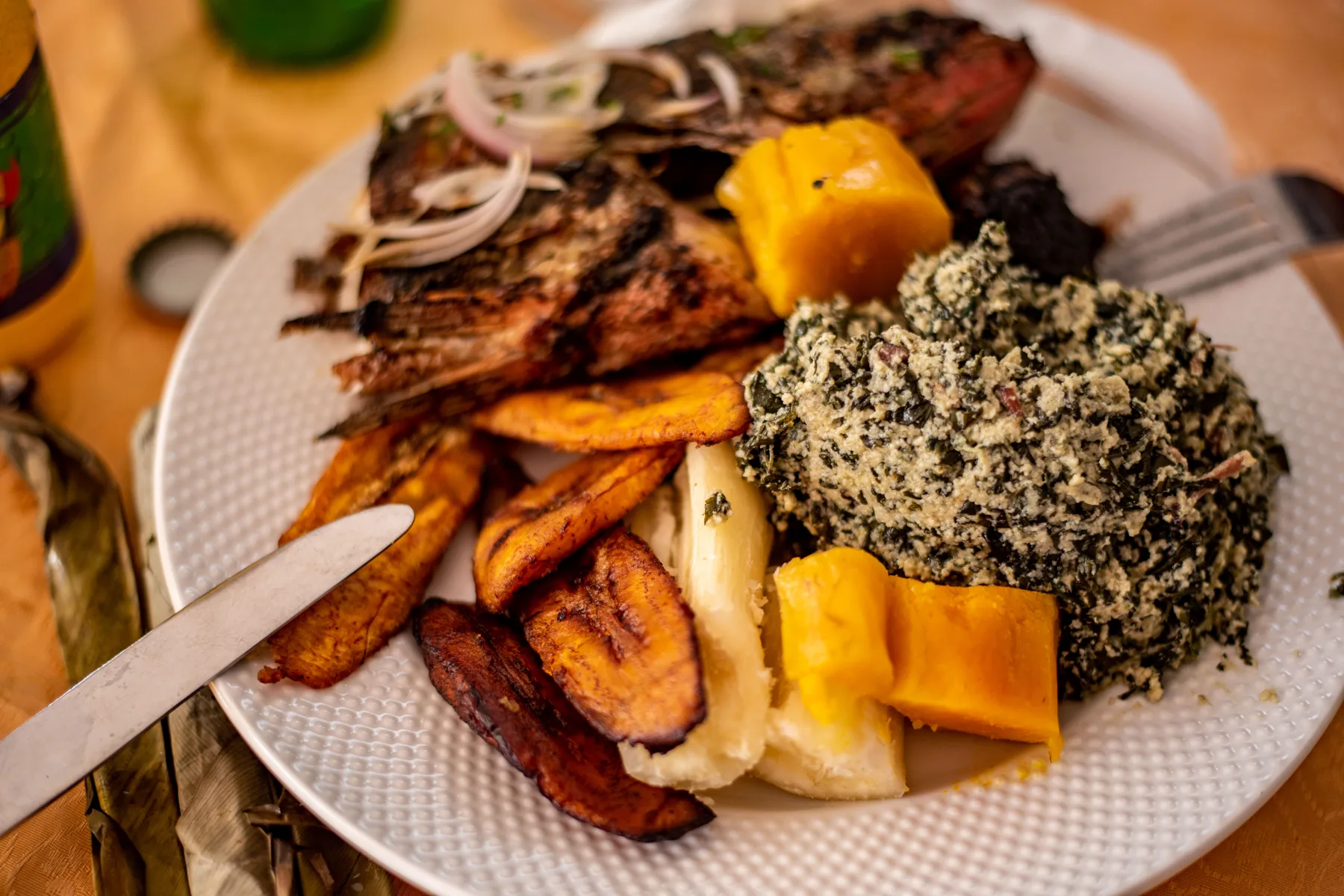
Photo: BACHELOR45 · CC BY-SA 4.0
Bitter leaves, chunky peanuts, palm oil and beef: how to make a thick, deep-green ndolé at home, the steps that matter most, and what to serve it with.
If there's one dish that says "you're welcome here" in Cameroon, it's ndolé. It's the country's national dish, and you'll find it at the heart of every important occasion: weddings, funerals, end-of-year gatherings. Put a pot of ndolé on the table and your guests know you've made an effort.
The good news is that ndolé isn't complicated. It takes time, about 40 minutes of preparation and an hour of cooking in Koki's recipe, but the method is simple. What separates a great ndolé from a watery, bitter one comes down to a few steps. Here they are.
What goes into ndolé
Koki's recipe makes six servings. You'll need:
- 500 g fresh ndolé (bitter leaf);
- 300 g raw shelled peanuts;
- 500 g beef stew cut, in chunks;
- 2 large onions and 5 garlic cloves;
- 80 ml palm oil;
- 2 Maggi cubes, salt and white pepper;
- 50 g crayfish or dried shrimp, optional but traditional.
That's it. No long list of spices: the flavour comes from the leaves, the peanuts and the palm oil.
Secret 1: tame the bitterness, then squeeze
The leaf is called bitter leaf for a reason, and your first job is to soften that bitterness without losing it completely.
Wash the leaves well in salted water, rubbing each one. Then boil them in a big pot of water for five minutes and drain. Now comes the most important step of the whole recipe: squeeze out all the water with your hands. All of it. Then taste a little. If it's still very bitter, boil and squeeze once more.
Why does the squeezing matter so much? Any water left in the leaves ends up in your sauce, making it thin and diluting the flavour. If your hands aren't strong enough, wrap the leaves in a clean kitchen towel and twist.
Secret 2: chunky peanuts, never peanut butter
Boil the raw peanuts in salted water for 20 minutes, until they're soft but not mushy. Drain, then blend them into a rough, chunky paste.
Stop before it turns smooth. Ndolé isn't made with peanut butter: those little pieces of peanut you can see and feel in every spoonful are part of what makes the dish what it is.
Secret 3: build the base slowly
While the peanuts cook, season the beef with salt, white pepper and one Maggi cube, and cook it with a cup of water over medium heat for about 20 minutes, until tender. Keep the stock: you'll need it.
In a large pot, warm the palm oil over medium heat until it melts. Add the sliced onions and let them fry for a good eight minutes, until golden and soft, then the garlic for two more minutes. Don't rush this part. Those golden onions are the foundation of the whole sauce.
Secret 4: cook the peanuts before the leaves go in
Stir the peanut paste into the onions, then pour in the beef stock. Let it cook for ten minutes over medium heat, stirring regularly, until the sauce smells fragrant and everything has come together.
Then add the beef, the crayfish or shrimp if you're using them, and the second Maggi cube. Five more minutes.
Only now do the leaves go in. Stir them through gently and cook over medium-low heat for 15 minutes, stirring from time to time. Taste and adjust the salt at the end.
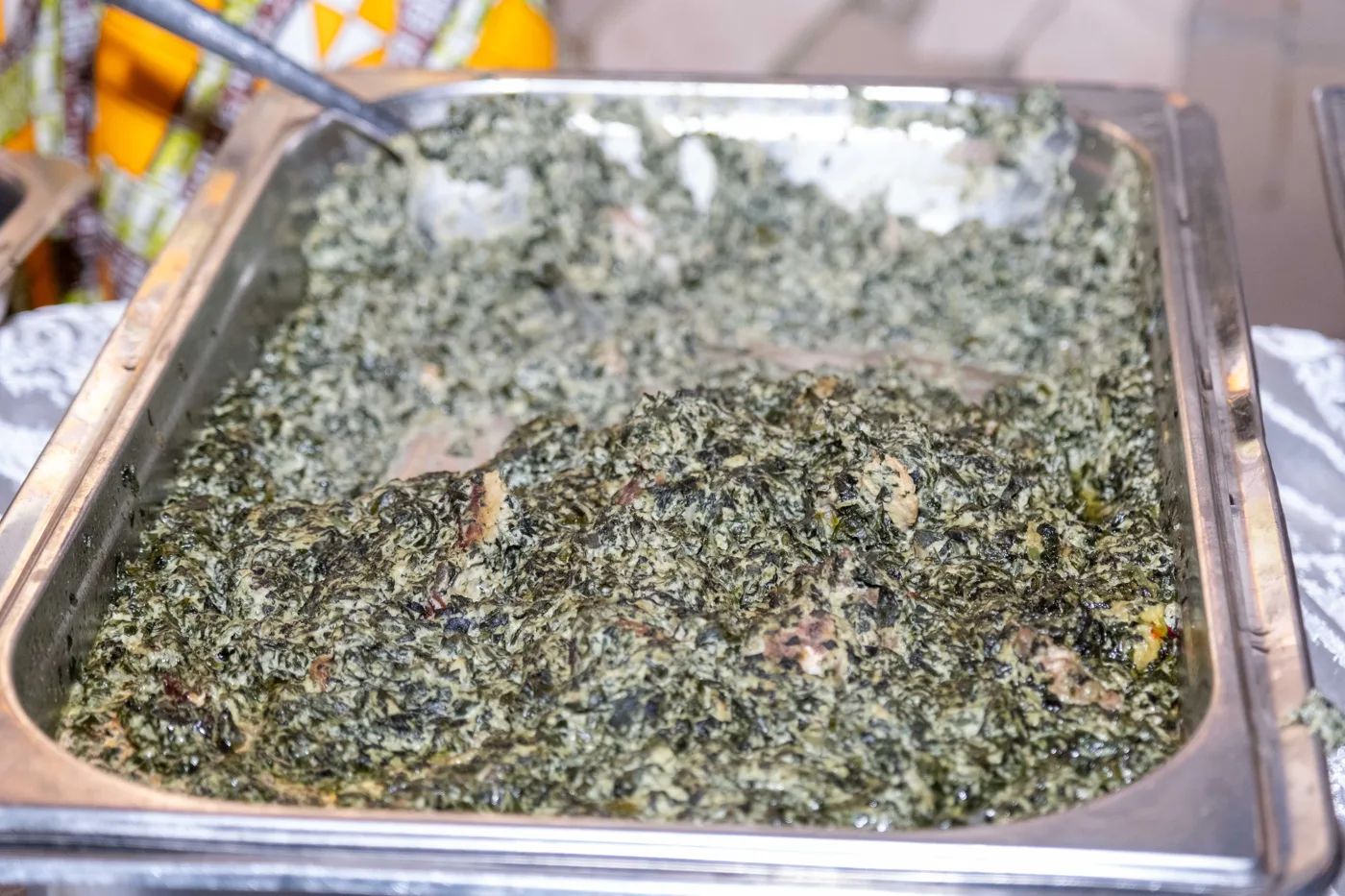
What good ndolé looks like
You'll know you've got it right when you see a thick, creamy, deep forest-green stew, with chunks of beef and golden bits of peanut all through it. It should hold together, dense and rich, not soupy. And the smell of palm oil and bitter leaf should fill the kitchen.
If yours looks runny, the leaves probably weren't squeezed enough. Next time, squeeze harder. It happens to everyone.
Secret 5: make it the day before
This is the tip that makes ndolé perfect for big occasions: it gets better as it sits. Make it the day before your gathering, and by the next day the flavours will have blended deeply. You'll have less to do on the day, and a better dish to serve.
What to serve with ndolé
Ndolé goes with:
- miondo, sticks of fermented cassava, boiled;
- plantains, boiled or fried;
- bobolo, a fermented cassava loaf wrapped in leaves;
- or simply white rice.
No bitter leaf where you live?
If you can't find fresh ndolé, Koki's recipe suggests fresh spinach with a teaspoon of baking soda. To be honest, it won't taste quite the same as the real thing. But it's a good way to practise the method, and to bring a little of home to your table when you're far from an African market. The app also suggests vegetable oil if you have no palm oil.
Ndolé, eru, okok: don't mix them up
Ndolé is green, thick and cooked with peanuts, so it sometimes gets confused with okok. But it's a different leaf, prepared a different way. If you're curious, we explain the difference between eru and okok in a separate article.
👉 Eru vs okok: what's the difference?
In short
- Boil the leaves, then squeeze out every drop of water.
- Blend the peanuts chunky, never smooth.
- Fry the onions slowly until golden.
- Cook the peanut sauce before adding the leaves.
- Make it the day before if you can.
The full recipe, with every quantity and step, is in the Koki app, in English and French, and it works offline, so you can cook even when the network drops. 👉 Get the ndolé recipe or download Koki, and tell us how your ndolé turns out.
Recipes in this article


Cook with Koki
All of these recipes in English and French, with guided cooking mode. They stay available offline.
All the ways to get Koki →